The 10-Minute Weekly Meeting Every Shop Owner Should Start
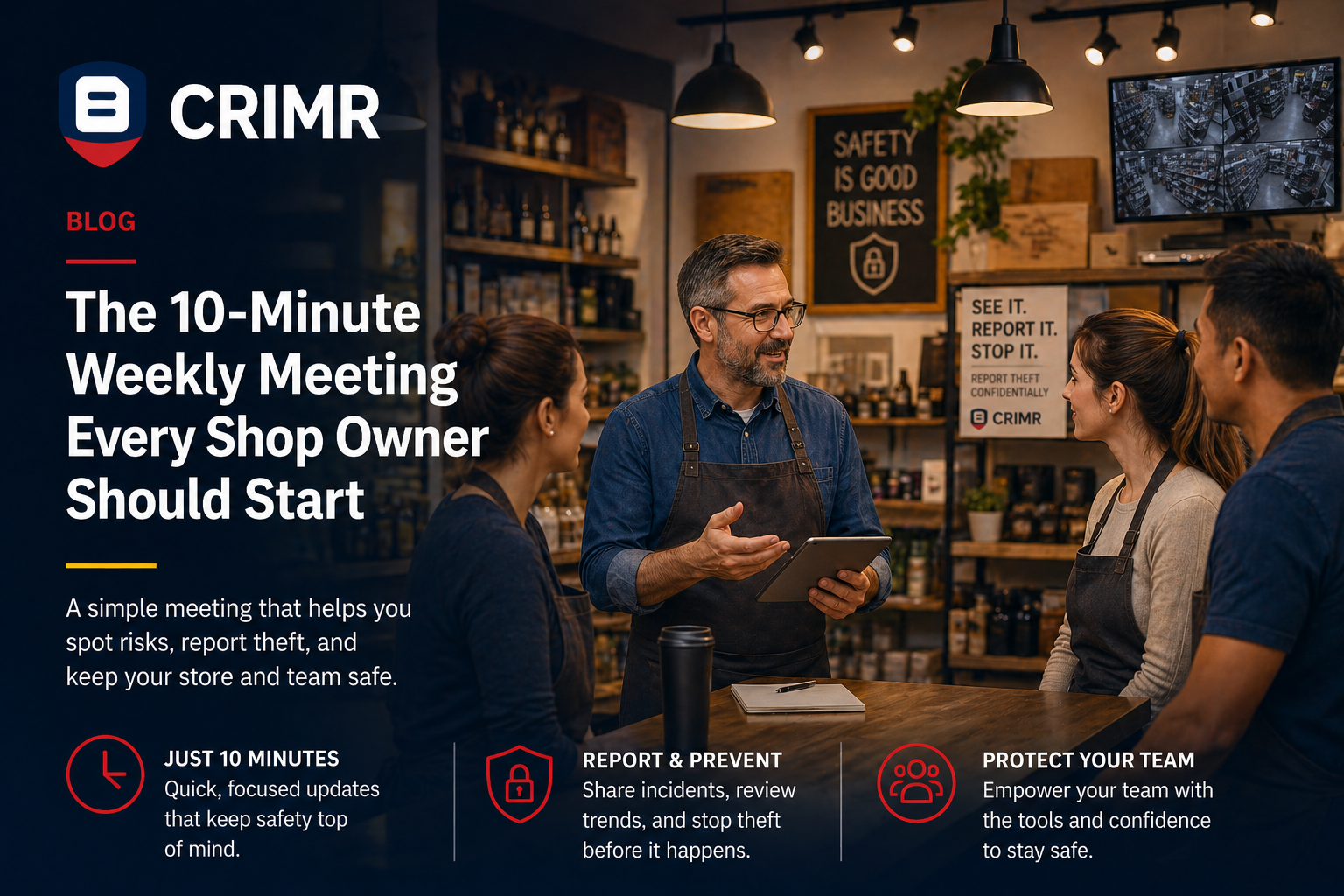
If something happened right outside your shop last week and no one told you, you’re not alone.
For independent retailers, most of what goes right or wrong in your business happens quietly. A customer slips on a loose mat. A group loiters outside your front door for 45 minutes. Your window sign falls off mid-day. Small moments with big ripple effects on safety, foot traffic, and brand trust.
The good news? Fixing this doesn’t require a big system or fancy software. Just ten minutes. Every week.
Why This One Meeting Matters So Much
Your team is on the front line. They see things before you do. They hear customer comments, spot disruptions outside the storefront, and notice when something feels off.
But without structure, most of that info never gets shared. That’s where a 10-minute weekly team huddle changes everything.
It’s a simple rhythm that creates space to:
• Document internal incidents
• Trigger external reporting when needed
• Spot patterns before they become problems
• Keep your brand trustworthy and your sidewalk safe
Quick Stat: The National Retail Federation reports a 93 percent increase in shoplifting incidents since 2019. Dollar losses from theft are up 90 percent. That’s not just big-box stores — small shops are exposed, too.
Source: NRF 2024 Retail Security Survey
What to Cover in 10 Minutes or Less
Here’s your focused format:
1. What did we notice last week?
• External incidents: loitering, sidewalk obstructions, aggressive behavior
• Internal disruptions: slips, equipment issues, poor lighting
Conversation Starters:
“Did anything feel off around the storefront?”
“Did any customer make a comment about the outside area?”
“What’s something we could clean up or reposition?”
2. What’s happening with foot traffic?
Quick Stat: U.S. retail foot traffic rose 0.4% year-over-year in 2024 — showing that in-person visibility still matters
Source: Investopedia 2024 Retail Trends Report
Ask:
Are we getting more or less walk-ins?
What’s the vibe during slow vs. busy periods?
3. What should we fix, report, or escalate?
• Is signage clear?
• Are lights working?
• Are there repeated disruptions that need to be reported to local authorities or property managers?
4. Who owns what this week?
Assign micro-tasks:
“You watch the sidewalk before lunch.”
“You handle signage and log updates.”
Use the C.A.R.E. Framework
Build a culture of retail safety with this 4-part system:
C — Check your storefront and entry daily
A — Ask your team what they noticed
R — Report anything suspicious or unsafe internally
E — Escalate to outside help when needed
This keeps the system practical, repeatable, and team-driven.
Create a Culture of Reporting
You don’t need fancy software. Use a clipboard. Or a whiteboard in the break room. Start with small moments even near misses. They’re signals.
When patterns emerge, loop in external help. That could mean filing a report with the local BID, calling law enforcement, or alerting your landlord.
Quick Stat: 85 percent of retailers now invest in internal loss prevention or external safety services
Source: NRF 2024 Retail Security Survey
Track Progress Over Time
Week 1: Run your first huddle. Listen. Ask questions.
Week 2–4: Document repeat issues, foot traffic trends, and safety fixes
Month 2: Compare notes. What changed? What needs escalation?
Start small, then expand. Add signage reviews, customer feedback, lighting checks, or even a sidewalk sweep assignment.
Final Word: Try One This Week
This isn’t corporate red tape. It’s a habit that protects your brand, makes your store safer, and helps your team feel seen and involved.
So here’s the challenge:
✅ Pick a time this week
✅ Use the CARE framework
✅ Ask three questions
✅ Write down what you hear
✅ Follow up
That’s it.
Start with 10 minutes. You’ll be surprised how much your team already knows — and how much better your shop will run when you listen.